
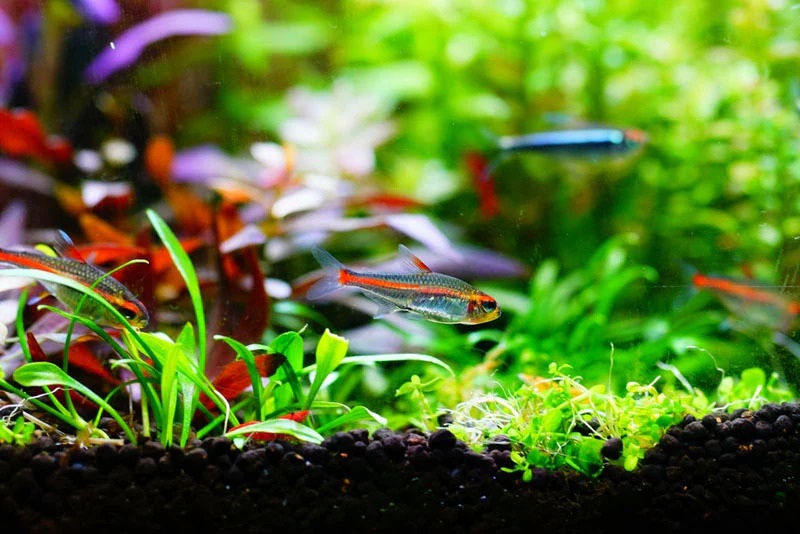
Keeping aquarium plants healthy and alive is a task. You can’t just add plants in the tank and forget about them. They need constant care and attention. Still, sometimes they come under stress and start to die. It is when knowing ways to revive them is essential.
If you often experience trouble with the upkeep of the aquarium plants, you have arrived at the right place. In this article, we will provide 5 tips on how to revive dying aquarium plants.
Whether there is a lack of light and nutrients or disbalance in water parameters, this article will walk you through with the common issues and help you adjust them to restore the plants’ health.
Keep reading to find out!
Identifying the Symptoms
Before we move towards the plants’ reviving section, let’s find out some common telltale signs that give a hint about the deteriorating plant health.
- Yellowing of leaves– Whenever the aquarium is lacking nutrients, especially iron, you will notice yellowing of leaves.
- Melting of leaves– When the water quality is really poor, and there is an imbalance in water nutrients, you may see the leaves getting transparent or melted. Carbon dioxide deficiency is also one reason for the melting of leaves.
- Brown or black patches– If there is algae in the tank, they compete with the plants for light, nutrients, etc, and as a result, the plants’ leaves develop brown or black patches.
- Slow or stunted growth– Whenever there is a lack of nutrients in water, and the level of carbon dioxide has also dropped, the plant will show slow and stunted growth. Additionally, lack of light may also contribute to stunted growth.
Besides these, you may see a lot more signs that could indicate that something is off and the plant is under stress. It could be due to a plant disease that will need different remedies and special care. Below are some proven tips that can actually help dying aquarium plants and bring life back into them.
A- Adjusting the levels of light
Light plays an important role in plants’ lives- whether they grow on land or in water. Often, the reason behind a plant’s stress is a lack of light.
The best part is, one can identify this cause by closely looking at the plant or its behaviour. If it seems stretching towards light or the stems growing more towards the source of light, it clearly indicates a lack of light.
In such cases, the plants will become leggy, look thin, weak, fragile and even floppy instead of being vibrant and sturdy.
Solution- You need to expose the plant more to the light. Increasing the light duration and intensity will curb the problem to a great extent. As soon as the plant starts to receive sufficient light, it will commence the process of photosynthesis, making food for itself, getting energy and looking healthy all over again.
If it is not possible to give direct sunlight to your aquarium plants, add aquarium light inside the tank. These lights mimic sunlight, ensuring plants engage in photosynthesis and convert their food sources into energy and get healthy and vigorous.
Note: It is important to mention that overdosing the plant with light is also harmful. Too much light will put the plants under stress, and it also welcomes algae proliferation inside the tank. If the leaves start appearing yellow or brown, it indicates that they are getting scorched due to too much light exposure. Therefore, you need to take calculated steps.
B- Adjusting the levels of nutrients
Lack of nutrients, aka nutrient deficiency, is another important reason why aquarium plants die. If the plants are showing slow growth or some unusual symptoms, there are high chances that there is a low nutrient level in the water and the plant is not able to cope up with the little supply.
Usually, in such a case, there will be no new growth or if there is, then pale and discoloured growth will appear. It is mainly because the building blocks that are needed for new leaves and stem development is absent in the water. If you experience such symptoms, it indicates a nutrient deficiency. Besides, there could be
- Poor root development
- Increased algae growth
- Dying of leaves
The most important nutrients that plants require are nitrogen, phosphorus, magnesium, potassium and calcium. So, you may try including any of these nutrients in the water and see if the condition of the plants improves. Using specialized aquarium plant fertilizers will really help.
Note: Exposing the plants to an excess of nutrients is also not beneficial. Often beginner aquarists end up adding inappropriate amount of nutrients to the tank which leads to nutrient overload. As a result, the leaves get burnt, called nutrient burn and look scorched.
In such cases, you need to reverse the process by managing the extra nutrients by either increasing the filtration capability of the filter or replacing the filter media. Regular water changes will also curb the problem to some extent and reduce the excess nutrient level in the aquarium.
C- Adjusting the levels of carbon dioxide
Additional carbon dioxide is not a necessity for most of the aquarium plants’ growth and development. However, maintaining a proper level of CO2 is a must because it is an integral part of photosynthesis, just like light and oxygen.
If the new growth seems ceased and the plant look stunted even after providing proper light and nutrients, an imbalance of carbon dioxide could be a reason. The recommended level of carbon dioxide for planted aquariums falls between 10 to 30 ppm, wherein low-tech tanks need around 10 ppm, medium require around 20 ppm, and high-tech tanks should have between 25 and 30 ppm.
Usually, most aquascapes aim for 20 to 30 ppm because under this range, plants grow fast and healthy, and fish remain safe. Also, in this range, the algae are naturally suppressed. CO2 above 35 to 40 ppm will put fish under stress.
The best is to have a testing kit at home to check the level of carbon dioxide and adjust the parameter accordingly.
D- Adjusting other water parameters
Beside light, nutrients and carbon dioxide, other water parameters like temperature and pH also decides the condition of aquarium plants. Whenever you see signs like slow growth, pale colours and wilting of leaves, understand that the water parameters are not adequately balanced– either the temperature is too high or low, or the water has gone too acidic or basic.
Make sure you know the requirements of your plants and then adjust the water parameters accordingly. You may need to add warm or cold water to adjust the water’s temperature, and the same goes for the acidity. All you need is to do is ensure that you keep the parameters within the range of the plants’ requirements to help them grow strong and healthy.
E- Check compatibility
Last but not least, you must know that there are compatible plants in the tank. It means that there should be no fish keen to munch on the leaves of the aquarium plants.
If you see your fish eating your plants, you need to remove those plants and replace with some other that fish don’t enjoy eating. Research a bit about the eating habits of your fish to understand what aquarium plants fit the best with the little swirling creatures in your tank.
Final words
Reviving dying aquarium plants is not a cakewalk; yet, one can do it after identifying the causal reason behind it. While most problems arise due to an imbalance in water parameters like temperature, light, pH, nutrients, etc.; incompatibility among fish and aquarium plants cannot be neglected.
Once you have identified the problem, adjusting the parameters to revive the plants is possible. You can improve the light by increasing is intensity or duration, ensuring an optimum level of carbon dioxide, and even ensure supplying balanced fertilizers to the plants. At the same time, making sure that these parameters stay stable is equally important.
Removing the damaged leaves or pruning the weak of leggy growth will help the plants look healthy. Once you think that the parameters have been adjusted, focus on steady maintenance by regular monitoring. Stick to a consistent fertilizing schedule, maintain stable carbon dioxide levels and change water regularly to keep the environment healthy. It will prevent future issues, too. Within a few days, you will be able not only to revive your aquarium plants but also enjoy a lush green aquascapes.
Please fill in the form get updates on new articles.
