
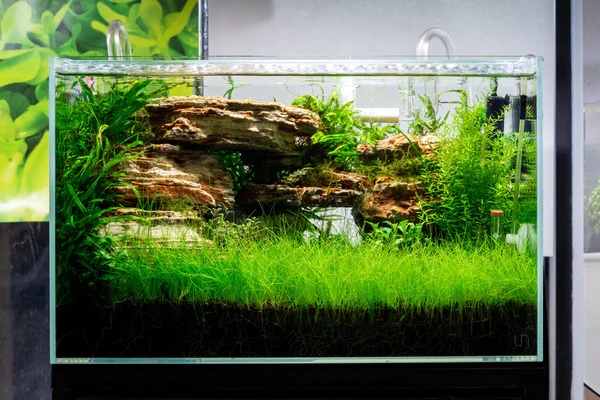
You have tried all the possible ways to create a stunning centerpiece in your aquarium by using colorful aquarium plants, but now they are looking dusty and deteriorating the entire look. This is a common issue that aquarists face at one point.
The ‘dust’ on the plant leaves may appear in different ways– a thin layer on the leaves, small particles settled above them, or a powdery coating covering them. Even though the condition seems only an aesthetic issue, when left ignored for a long time, it may invite multiple problems. It can affect plant health, deteriorate water quality, and impact the overall stability of the water parameters and the tank’s environment.
Therefore, knowing the reasons behind the dusty aquarium plants and the solutions to overcome the problem is necessary. This article will help you understand why and how aquarium plants accumulate dust, the reasons behind it, and effective solutions for long-term prevention. Once you go through it, you will be able to reverse the dusty plants’ condition and make them healthy and vibrant all over again.
What exactly are dusty aquarium plants?
‘Dusty’ here doesn’t indicate the dry dust that often accumulates over things. Instead, it is the grimy particles that keep on amassing over the leaves of aquarium plants and fade their lush green and vibrant look, giving them a slimy and dirty look. It may happen due to different reasons, such as
- Algae growth- It often creates a brown or black dust-like coating over the plants’ surface.
- Mineral deposits- If you see white or chalky dust, the reason could be mineral deposits that come from the aquarium soil.
- Detritus or debris- It is the organic waste particles that keep adding up on the leaf’s surface.
- Substrate dust- This is also due to fine particles coming from the gravel or soil.
Once you know the cause behind the dusty look, taking preventive and remedial steps will help. So, let’s look at them in detail.
ALGAE GROWTH
One of the most common reasons for getting dusty-looking aquarium plants is the excess of algae. If there is green film on the leaves’ surface, there is a high probability of green algae inside the tank. Likewise, you may see brown dust like algae, green spot algae, and even black algae, wherein the leaves develop dark and fuzzy patches.
It may happen due to an excess of light or an imbalance in nutrients. Both these fuels cause algae blooms. Low concentration of carbon dioxide also triggers algae development.
MINERAL DEPOSITS
When there is a white or chalky appearance on the leaves, there is a high chance of mineral buildup from hard water. Usually, these are the deposits of calcium or magnesium. It may happen when the water pH and hardness are very high. If you have grown surface plants, water evaporation may also leave minerals behind, giving a white, chalky, dusty appearance.
Mineral deposits are tough to remove compared to dust due to algae. Often, they appear on the glass as well.
DEBRIS
Whenever you introduce anything new in the tank– be it a plant, décor item, tool, or anything else- substrate gets disturbed. As a result, fine particles from gravel settle on leaves, giving them a dirty appearance. Some fish are also substrate diggers, and when they dig the soil, the fine particles make the water cloudy and leave dust.
You can identify this type of dust by looking closely. For instance, if the dust blows away when water is disturbed or when it doesn’t look slimy or green, the dirty leaves are solely due to soil debris.
In addition, organic waste and detritus also contribute to dusty aquarium plants. It usually happens when there are poor hygienic conditions and low circulation in the tank. It causes soft and fluffy particles, giving water a cloudy appearance.
How to Overcome Dusty Leaves?
Identifying the reason behind the problem takes you one step closer to its prevention. Now that you already know why plants get dusty look, below are the ways that can help you overcome the issue.
A- Reducing algae
Algae bloom can be managed in different ways. First of all, you need to reduce the excess lighting. This is the major reason behind algae proliferation. All you need is to limit lighting to 6 to 8 hours per day. If you have put the tank near the window from where light enters all through the day, maybe it’s time to give your tank a new spot.
You also need to maintain nutrient balance by using fertilizers in the right amount. Check what the nutrient needs of your aquarium plants are and add them accordingly. Whenever the plants starve of fertilizers, their growth ceases, and this gives an advantage to algae to bloom.
You may also add some algae eaters in the tank, like Amano shrimp, Otocinclus catfish, etc. They will feed on algae without harming the aquarium plants.
B- Reducing hard water deposits
The first thing you can do to reduce hard water deposits is to clean and remove them properly using a soft cloth. You may also get an algae scraper that helps get rid of mineral buildup on the walls of the tank. Later, you can change 50% of the water wherein and use 50% RO water and 50% tap water. A water softener pillow is another way to reduce water hardness.
Hard water deposits also occur when the water filter is not working properly. So, maybe it’s time for you to adjust it. Besides, using natural things like driftwood or almond leaves in the tank also helps to soften the water naturally.
C- Reducing substrate dust
Whenever you setup a new tank or clean the aquarium, substrate gets disturbed fine particles accumulate on leaves. To overcome this condition, run filter for 24 to 48 hours and use fine filter floss. It will trap most of the dust, making the water clear. Also, try not to disturb the gravel often. Be gentle while cleaning the tank and avoid deep vacuuming as it causes dust clouds that again amass on the leaves.
One more preventive step that you can take is using a plant mist cleaner. All you need is to gently spray plants using a plant mist cleaner and wash off the settled dust.
Other Tips to Maintain Clean Plants
The first thing you can do whenever you see your aquarium plants dusty is start cleaning the tank. Perform manual cleaning first by gently brushing the leaves with your fingers. For stubborn algae, use a soft toothbrush. Most of the problem will be eradicated by gentle cleaning only.
Make sure you do not touch the delicate plants as they are prone to getting damaged easily.
Secondly, you may check if the filter is working properly. Maybe it’s time to replace the filter and fit it correctly in the system. Check all its parts, including the suction, to ensure it is circulating the water efficiently.
You may also use a sponge filter to remove fine particles floating in water. It removes them without clouding the water. You may also try your hand at a gravel vacuum, which is another efficient tool to clean aquariums.
Long-term strategies to prevent dusty aquarium plants
Once you have fixed the problem and there are no more dusty aquarium plants, it’s time to take some long-term preventive measures so that you never face such situations again. You can follow the steps below to ensure a healthy tank environment and clean plants-
Consistent lighting – The lighting should always stay balanced in the aquarium. If the tank is low-tech, light it for 6-8 hours; likewise, for high-tech, 8-10 hours of light is required. Also, make sure not to change the light’s intensity suddenly. Sudden fluctuations stress the aquarium plants. If the light is appropriate, there are very few chances of algae development, and this will keep the plants healthy and vibrant instead of dusty.
Maintain water parameters within range- Besides light, water parameters like pH, hardness, alkalinity, etc., should always stay within the right range. For instance, nitrates under 20 ppm, phosphates under control, GH and PH within plant-friendly range, etc. When all these parameters stay within the range, there’s little chance of any mishap, and thus, plants stay healthy and vibrant.
Weekly water changes- Make sure you change water after regular intervals religiously. From removing extra nutrients and waste particles to detritus and algae spores, water change helps to maintain a clean aquarium. When you do this consistently, dust issues will never arise in the tank.
Hire a cleanup crew- From the cleanup crew, we don’t mean humans. In aquariums, adding creatures that love to graze waste particles and algae is a good decision, as they act like natural water cleaners and become the cleanup crew for your tank. Siamese algae eater, black molly, and bristle nose pleco are some of the algae-eating fish that you may think about. In addition, shrimps and snails also feed on algae and reduce their number in the tank.
Keep strong water circulation- Water should flow consistently and evenly throughout the aquarium. When the water circulation is strong, the chances of algae settlement on the plants, dust accumulation on the leaves, dead zones, and stagnant pockets will be reduced. You may try adding a wave maker to the tank if the issue of dusty plants is high.
Other than these, using a good fertilizing routine with the help of quality aquarium fertilizers and maintaining proper trimming and pruning schedules also takes you one step closer to a healthy and vibrant tank.
When to Be Worried About Dust on Plants?
Usually, dust on the aquarium plants is harmless. It only reduces the aesthetic and lush look of the plants. However, it is one of the signs that aquarists should not ignore because neglect may cost their plants.
Since dusty plants are easily fixable, taking action on time, as soon as you observe the condition, helps tremendously. If you see that plants are turning yellow or translucent or leaves are melting, find the root cause and make efforts to improve the condition.
Some other telltale signs that indicate something is wrong with the tank are the following-
- Strong foul smell from the tank
- Fish frequently come to the surface to breathe.
- Algae are spreading fast and covering most of the leaves.
All this directs to one thing– the quality of water has deteriorated and there is a deep imbalance in water parameters. So, all you need is to find the root cause and work on it.
Final words
There is no denying that aquarists often stumble with the problem of dusty aquarium plants. But the good news is, it is a very easily manageable issue. Irrespective of the reason behind dusty plants– algae bloom, mineral deposits, substrate dust, or detritus, solutions are simple and easy to fix. All you need is to maintain the tank’s hygiene and improve the water parameters, and half of your problem will vanish. With consistent maintenance and proper diagnosis, you can restore your plants to their natural, vibrant beauty.
Please fill in the form get updates on new articles.
