
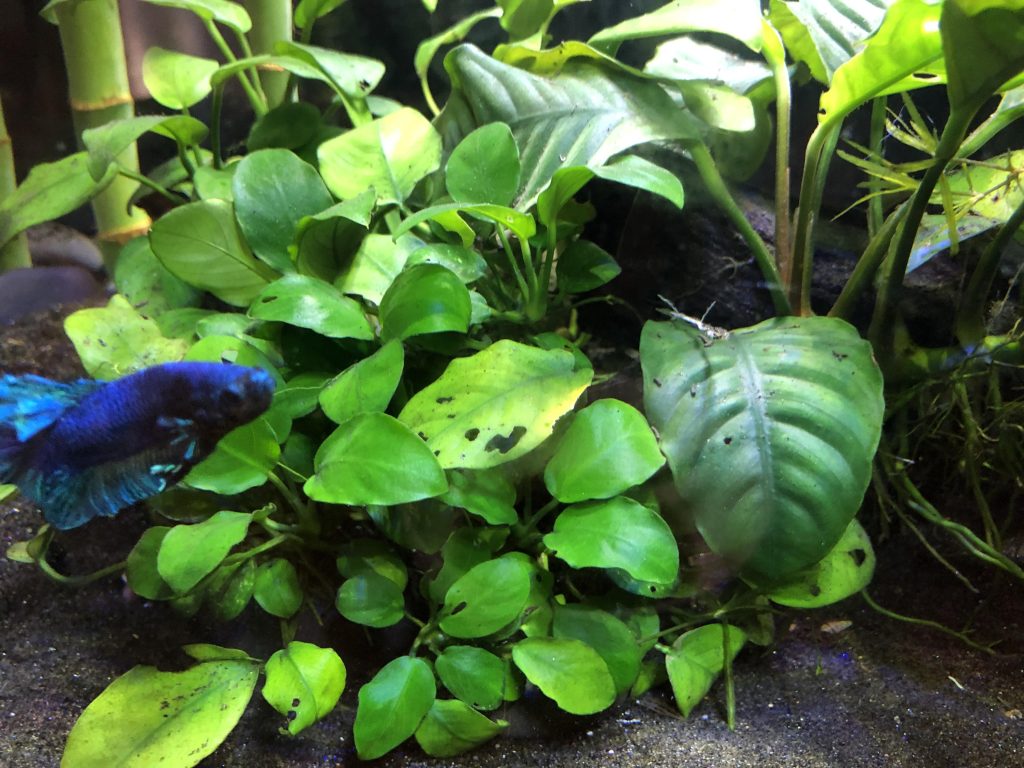
Getting an aquarium is a wonderful idea. It’s a great way to create an aesthetic and appealing ambiance at home. Adding some colorful fish and green plants can level up the entire look of the space in an instant. However, you need to be extra cautious to ensure that the living beings inside the closed water ecosystem are healthy and happy. It includes both fish and aquarium plants.
This article will put light on one of the common issues that aquarists face with their aquarium plants– holes in leaves. There could be multiple reasons why aquarium plants have holes, but the good news is it can be fixed.
Let’s learn why aquarium plants have holes and ways to fix the issue.
Reasons behind Holes in Aquarium Plants
While there could be different reasons for getting holes in aquarium plants, the foremost one is a deficiency of nutrients. Plants require different macro and micronutrients for their growth and development, and the lack of any one of them could be detrimental to a plant’s health. It may lead to different symptoms, and holes in leaves are one of them.
In the list below, you can find the different reasons behind holes in aquarium plants-
A- NUTRIENTS DEFICIENCY
If a steady supply of nutrients is missing in the tank, the tissues of aquarium plants start weakening and wearing off. Leaves turning yellow, tips turning black and formation of holes on the leaves are some common symptoms that one may experience due to lack of nutrients.
Among nutrients, below are the major culprits behind holes on the leaves-
Potassium– This nutrient supports leaf tissues and regulates cell strength. Also, it helps in transporting the nutrients to different parts of the plant for their proper growth. In the absence of potassium, leaf tissues start to die, creating holes that reduce the plant’s aesthetic. It usually happens in the older leaves first.
Below are some other related symptoms that you may see due to potassium deficiency-
- Small pinholes that expand into irregular holes
- The edges of the holes are turning yellow or transparent
Nitrogen– Holes may also appear on leaves due to a deficiency of nitrogen. It happens because nitrogen is a necessity for protein and chlorophyll production. If the water or substrate lacks this micronutrient, the overall health of the plant gets impacted, and the leaves get damaged too.
Some common symptoms due to nitrogen deficiency include the following-
- Leaves become pale and dull
- Plant growth slows down
- Old leaves turn yellow, get weak, and start developing holes
Magnesium– Since magnesium is also a part of chlorophyll, its deficiency is hazardous for the plant’s health. The leaves get affected negatively due to it.
Other symptoms include the following-
- Yellowing between leaf veins
- Leaves turning brittle that eventually tear or develop holes
Fixing the Issue
Since holes are created due to nutrients deficiency (primarily potassium), maintaining a nutrient balance will reverse the problem. It can be done by the following-
- Take the water test to know the level of nutrients in the tank. It will help you understand which nutrient is lacking and which needs replenishment.
- The level of potassium should be around 10 to 15 ppm to ensure that aquatic plants stay healthy.
- Offer fertilizer that contains potassium or supply a proper dose of complete liquid fertilizer to the plant.
- Increase dosing frequency rather than giving one large dose to the plant.
These are some of the ways of fixing the nutrient imbalance in the tank and making the aquarium plants healthy all over again. Once the level of potassium and other micronutrients is balanced, there will be hardly any holes in the leaves.
B- DAMAGE DUE TO FISH AND INVERTEBRATES
If you are sure that the nutrients are balanced in the aquarium, look out for the fish and invertebrates in the tank. Sometimes, it is the living beings (some fish and invertebrates) that love to munch on the leaves of the plants and create holes. Some fish nibble or graze on plants, especially those with soft leaves, and snails and shrimps love to feed on soft and dying ones.
In such cases, you will see the following symptoms, other than just holes on the leaves, such as-
- Holes of irregular sizes
- Clean bite marks
- Missing leaf sections
- Sudden appearance of damaged leaves
Below are the plant-eating fish that could be the probable reason behind the holes in your aquarium plants-
- Goldfish
- Mbuna
- Oscars
- Uaru spp.
- Leporinus spp.
- The Common Pleco
- Silver Dollars
- Buenos Aires Tetras
- Scats & Monos
- African cichlids
Fixing the Issue
If the holes are appearing due to plant-eating fish, snails, or shrimps, removing them from the aquarium is the only solution. You can replace the plant-eating fish with those that don’t graze the aquarium plants. However, if you can’t remove the fish, you may consider adding those aquarium plants that plant-eating fish don’t eat at all. Adding tougher plants like Anubias, Java Fern etc. would repel plant-eating fish and thus, your plants stay safe.
Snails and shrimps usually feed on dead and decaying leaves. In such cases, you need to improve the plant health so that they do not nibble on leaves. At the same time, controlling the snail population will also curb the problem to a great extent.
C- NATURAL LEAF DETERIORATION
If the leaves are deteriorating naturally, there is nothing to worry about. After a certain time, the old leaves start to degrade. In the process, the leaves wear and tear, developing holes and finally shed. This is normal plant behaviour.
It happens because plants direct nutrients to the new growth. As a result, the old leaves and other parts of the plant look weary while the new growth looks healthy.
Fixing the Issue
Since the sight of old and shed leaves is not good, you may remove them and make the aquarium visually appealing. You can also trim the old leaves regularly to create a cleaner appearance. Removing the leaves with holes and other imperfections will make the tank look better.
Preventing Holes in Aquarium Plants
The best way to prevent holes in the leaves of aquarium plants is to address the causes. For instance, ensuring that the tank has sufficient nutrients, including potassium, nitrogen, and magnesium, will keep leaf damage due to nutrient deficiency at bay. Other steps that you might need to consider include the following-
- Replacing aquarium water after regular intervals
It is one of the ways to ensure that the tank’s water is clean and habitable for fish and aquarium plants. It is recommended to change around 10 to 15 percent of aquarium water every week. It removes or reduces the quantity of everything which is unwanted in the water, such as natural waste, uneaten food particles, plant debris, etc.
When the water is not replaced regularly, toxins build up over time, increasing the content of phosphate and nitrate. It leads to an algae bloom that has many hazardous effects on the aquarium life. For instance, excessive algae block sunlight, and plants compete for nutrients with them. it affects their overall growth.
Therefore, keeping the water clean and healthy takes you one step closer to aquarium plants with no holes and other deformities.
- Adjusting the lighting
This is another preventive measure that you can take to ensure plants are healthy with no holes on their leaves. Proper light is one essential criterion for a healthy plant. If sunlight is not available, including artificial lights in the tank and keeping them turned on for at least 8 to 12 hours every day becomes essential. It is also a wise decision because direct sunlight often welcomes algae.
When the lighting requirements of the aquarium plants are met, they can perform photosynthesis properly and grow up to be healthy. At the same time, good lighting helps plants absorb carbon dioxide efficiently.
- Test water parameters regularly
Keeping an eye on the water parameters will give an idea about the level of essential nutrients and what’s not needed in excess. It will also help you monitor pH and the levels of ammonia, nitrites, nitrates, and phosphate. Testing the water will also detect any imbalance in the water at an early stage.
Final words
A tank with healthy plants and swirling fish is a sight to behold. However, when the plants look distressed with disintegrated leaves is truly dissatisfying. While it can happen due to one or multiple reasons, lack of potassium in the water is the main culprit. The good news is, you can manage this issue and reverse the deficiency of potassium.
Other reasons for holes in leaves could be plant-eating fish, snails or shrimps, unbalanced water parameters, improper lighting, or dirty water. All of these could contribute to distressed leaves and plants in one way or the other.
So, keeping an eye on the water parameters and looking for the fish and snails if they are munching on plant’s leaves is important. You can take preventive steps and keep your plants healthy. If you have managed all the possible issues and are now experiencing new and healthy leaves, congratulations! You are on the right path. However, if there are holes in the new leaves as well, there is an active issue that needs your immediate attention.
Please fill in the form get updates on new articles.
