
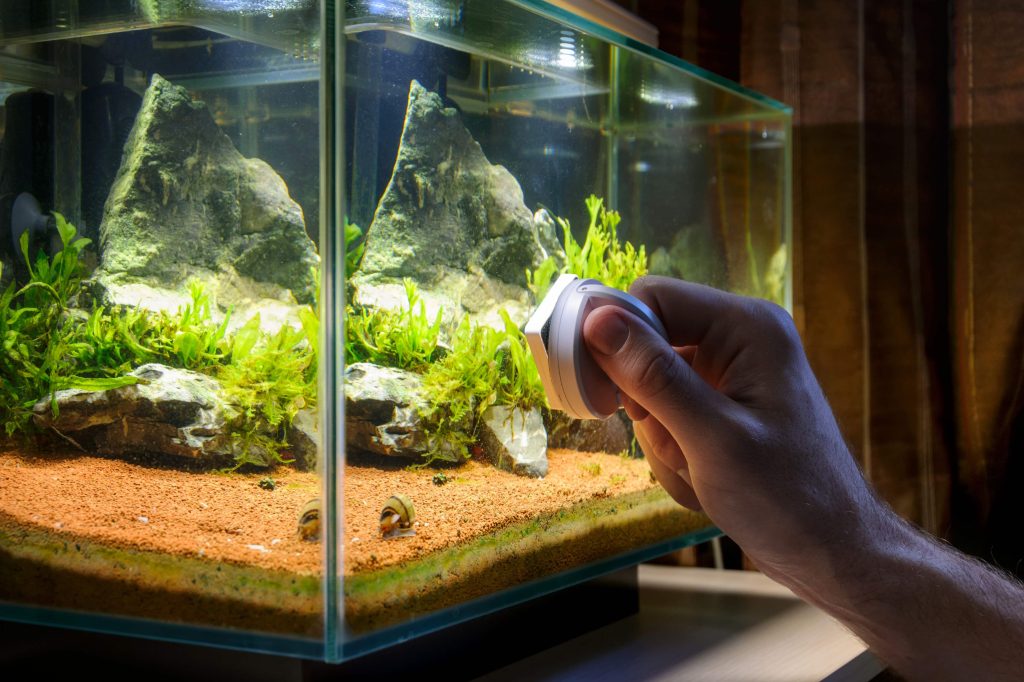
Taking the first step towards a hobby is exciting, and when it is about setting up the first aquarium, thrill, along with confusion, are apparent. There are multiple considerations that you need to keep an eye on– from choosing the right aquarium in terms of shape and size to selecting the right décor items. Besides, if you are thinking about adding live plants, it is another area to ponder upon.
This article will help you understand how to make your aquarium fish-ready.
An aquarium is incomplete without fish, and with this thought, many aquarists, especially beginners, start adding fish too early. So, how to decide what time is too early, too late, and right?
An aquarium needs to be truly ready to support life. It means the ecosystem inside the tank should be balanced enough to allow life to survive and thrive. It is important to understand that an aquarium is not just a decorative glass box but something that carries life.
When you add fish to an aquarium that is not ready to support life, there is a high chance that the fish come under stress, fell ill, and even die. Therefore, it is crucial to learn whether the tank is fish-ready or not and how to make it a life-supporting system so that your fish stay healthy, happy, and never die due to stress.
By the end of the article, you will know whether your tank is ready for the survival of fish and how to keep it functional in the long term.
Understanding Tank Readiness
Tank readiness means your aquarium is not only safe but also supports the life of your fish. In addition, it will never let your fish come under stress or cause health problems. When an aquarium is ready, it means that there are stable water parameters and beneficial bacteria. Besides, all the important equipment in the tank is working adequately.
If you are a beginner, you need to ensure the following before adding fish-
- Tank’s water is properly treated and conditioned
- There is a completed nitrogen cycle for the presence of beneficial bacteria
- Water has a stable temperature and pH within the specified range
- Filtration and oxygenation must be appropriate
- Tank’s size must be right according to the stock
- Décor should be safe
- Enough hiding spots
These are the first few things that any beginner aquarist must keep in mind and ensure so that nothing goes wrong. Since fish cannot speak, keeping the tank fish ready and later observing their behaviour will help you understand if everything is going smooth or there is some problem. Regular observation, testing, and preparation will ensure better outcomes instead of guesswork.
Why should you not rush fish into a tank?
If you want to add fish in a new tank immediately, you need to stop because rushing fish into an aquarium that is not yet ready will be of no good. Fish are highly sensitive to their environment and the way it may change.
Bringing a fish from an aquarium shop and adding it straight to your new tank may cause harm. It can cause the fish to come under stress. At the same time, the water parameters of the tank, such as temperature, pH, hardness, etc. needs to be stable as well. While in natural water, environmental changes take place gradually, in a tank it can be abrupt and rapid.
Therefore, you need to maintain stable water conditions in the tank and maintain a proper water cycle. Rushing fish may result in-
- Ammonia poisoning
- Damage of gills
- Breathing issues
- Weakened immune system
- Increased susceptibility to disease
- Reduce lifespan
Often, when a fish dies in a new tank, beginners blame it on bad luck or weak fish, when most of the time the real issue is an unprepared tank.
Making Tank Fish Ready: The Nitrogen Cycle
The foundation of a fish-ready aquarium is properly cycled water. For this, understanding the nitrogen cycle and the role of beneficial bacteria is a must.
Nitrogen cycle is a natural biological process that occurs in different steps. A tank accumulates a lot of toxic material, such as fish excreta, uneaten food particles, decaying plant materials, and a lot more. Besides excreta, fish also produce waste through breathing.
All these waste products release ammonia, which is highly toxic to the life in an aquarium. It is when the role of beneficial bacteria comes into play. These bacteria convert ammonia into nitrite, which then converts into nitrate, which is less harmful and can be managed through water changes. Ammonia and nitrite are both highly toxic gases that are released during the decomposition of waste products and need to be converted into nitrate, a less harmful gas.
These beneficial bacteria are present in the filter that you will be installing in your aquarium before adding the fish. Beneficial bacteria are also found in the substrate.
Cycling Tank: Why it is Non-negotiable
Imagine keeping your fish in a tank where there is an abundance of toxic gases. It will eventually harm the fish by burning the skin, damaging the gills, and even the internal organs that lead to their death. It is the reason why cycling the tank before adding live creatures is extremely important.
Please fill in the form get updates on new articles.
