
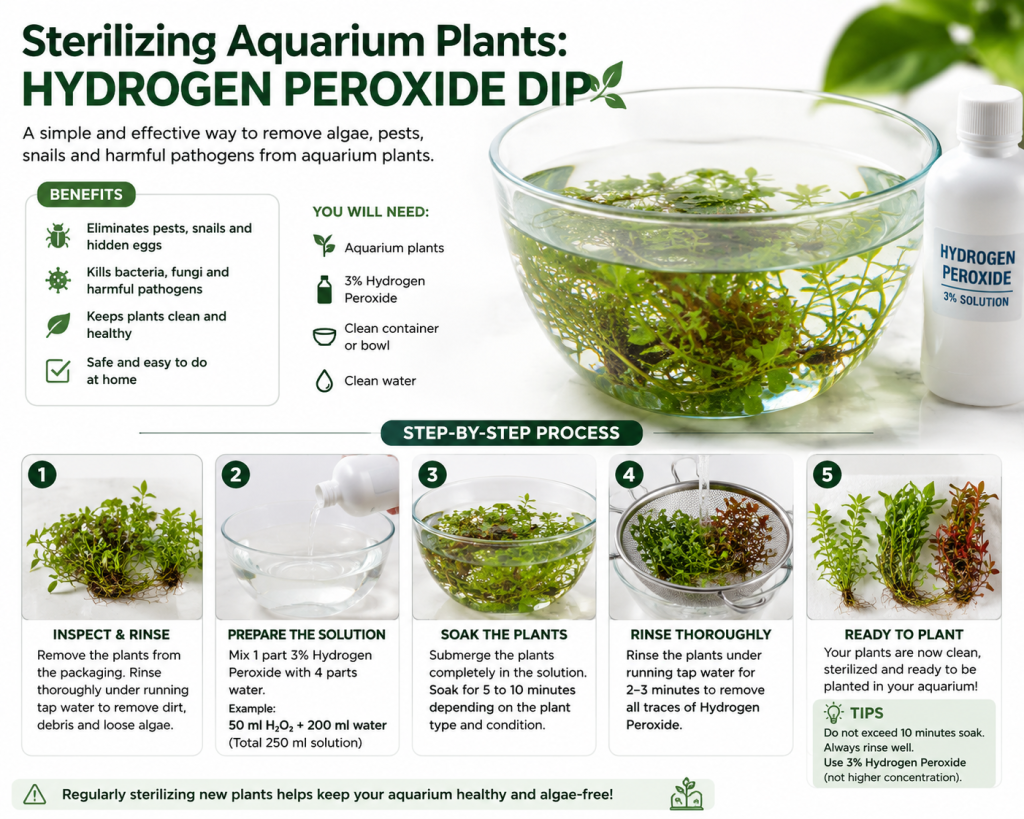
Sterilizing aquarium plants is an important step to make them fit for the aquarium. While quarantining is a better solution, the quickest one is their sterilization using some effective sterilizing agent like hydrogen peroxide (H2O2). It is a colorless and odourless disinfectant which is also used as a mild antiseptic.
Aquarium plants may come infested with certain pests, such as snails and their eggs. Often, these eggs are found hidden in clusters under the leaves. While they are harmless, they can multiply quickly and turn your aquarium into a snail tank. Besides, there can be worms, parasites, algae spores, bacterial colonies, and other hitchhikers that come with infested plants and can harm the fish eggs and degrade the tank’s quality.
It is when the role of aquarium plant sterilization comes into play. Sterilizing the plants ensures that they are now free from pests and other infestations and ready to enter the tank’s environment.
In this article, we will learn how to use hydrogen peroxide for sterilizing aquarium plants, how effective the dip is, and what other ways to make the aquarium plants safe for their new tank.
Hydrogen Peroxide Dip for Aquarium Plants
Dipping aquarium plants in hydrogen peroxide is an easy and effective way to remove pests, spores, worms and parasites from them. Below is a detailed guide with all the essential materials you may require for the hydrogen peroxide dip.
Materials Required
- High-quality Hydrogen Peroxide- Make sure it is a laboratory-grade material that is good enough to use as an oxidizer
- Water- You can use tap water; however, ensure that it doesn’t have a lot of dissolved minerals
- Bucket- Large enough to hold all the plants you want to sterilize
- Gloves- Since Hydrogen Peroxide may irritate sensitive skin, wearing gloves will help.
- Old toothbrush
- Water conditioner to dechlorinate
Steps
- Remove debris from plants
Aquarium plants may come with a lot of debris that is visible to the naked eye. So, your first step is going to be removing them by scraping using an old toothbrush. For this, first of all, wear your gloves and then submerge the plants in water. Take the toothbrush and scrap off the debris gently, without harming the roots. If you see any snails, use a long tong to remove them before anything else. In this way, you will get rid of the visible debris from the plants.
- Rinse the plants
The next step is to remove soil particles from the plants by rinsing them well under running water. Since soil is a good medium for bacterial proliferation and acts as a breeding ground for them, its removal is an important step.
- Mixing water and Hydrogen Peroxide
Create a mixture by using hydrogen peroxide and water. The thumb rule is adding 2 to 3 ml of H2O2 for every gallon of water. Take a large bucket where all your plants can dip without and damage to the leaves, or you can also make it in a large sink.
Depending upon the number of plants, you can create the desired mixture.
- Add water conditioner
Since tap water may have dissolved minerals and a large amount of chlorine, a water conditioner will dechlorinate it and make it suitable for aquarium plants. This step essential if you are having a freshwater aquarium and the plants are likewise.
Here, it is important to mention that your dechlorinator must be suitable for freshwater tanks, as some may add minerals to the water, causing unwanted growth of algae.
- Dip Plants
Now that your solution is ready with water and hydrogen peroxide, the next step is to dip the plants. Gently lower the plants and allow them to stay dipped in the solution for some time (not more than 5 minutes). If the plants are not hardy but sensitive, dipping for only 2 minutes is recommended. Make sure none of the leaves are getting damaged in the process.
In this stage, you must be wearing gloves as H2O2 can irritate the skin.
- Rinse Out
Once the plants are dipped for the scheduled time, take them out and rinse them under the running water or in the water with a water conditioner. You have to ensure that all the hydrogen peroxide is removed, especially from the leaves.
This is how we sterilize the plants in hydrogen peroxide. Now that the plants are disinfected, you can add them to your tank. To be even safer, you can quarantine them for at least 15 days before introducing them to the aquarium. It will be doubly sure that the plants won’t carry any spores, parasites, worms, or other infectants to your aquarium.
Common FAQs
Can we clean aquarium plants with hydrogen peroxide?
Since H2O2 is an effective disinfectant, you can definitely clean the aquarium plants using it. However, the solution you’ll be using should be diluted before use. Once you have cleaned them, rinsing the plants in dechlorinated water is essential before adding them to the final tank. Dipping the plants for at least 3 to 5 minutes is suggested, depending on the hardiness of the plant.
Is H2O2 safe for every aquarium plant?
Since it is advised to use a diluted solution of hydrogen peroxide, it is usually safe for all aquarium plants. Still, you should be mindful about the dipping time, which depends on the hardiness of the plant. Hardy plants such as … can be dipped for 5 minutes, whereas soft and delicate plants like … can be dipped for not more than 2-3 minutes.
What are the H2O2 dipping benefits?
Dipping plants in hydrogen peroxide helps disinfect them. It will remove the algae spores that are often found on the leaves. In addition, the risk of diseases that usually comes from bacteria, fungus and parasites also reduces after a hydrogen peroxide dip.
It is important that you always use the recommended dose because when used in excess, it may burn the leaves of delicate plants.
Are H2O2-dipped plants safe for aquarium fish?
As we are using a diluted solution of hydrogen peroxide for dipping aquarium plants, it will not cause any harm to the aquarium fish. However, it will harm the algae and bacteria present on the plants.
Final Words
Whenever you buy aquarium plants from a store, there is a high probability that they have algae spores, bacteria, or fungi on them. Therefore, always consider dipping them in an effective disinfecting solution like hydrogen peroxide as a non-negotiable task. It will not only save your plants and give them a healthier life but also prevent adulterating the aquarium water.
Always remember two important things: make a solution by diluting hydrogen peroxide as per the given directions, and dip the plants only for the prescribed time. If you are following these two instructions, the plants will stay healthy, and no hitchhiker will enter your aquarium through the new plants.
Please fill in the form get updates on new articles.
