
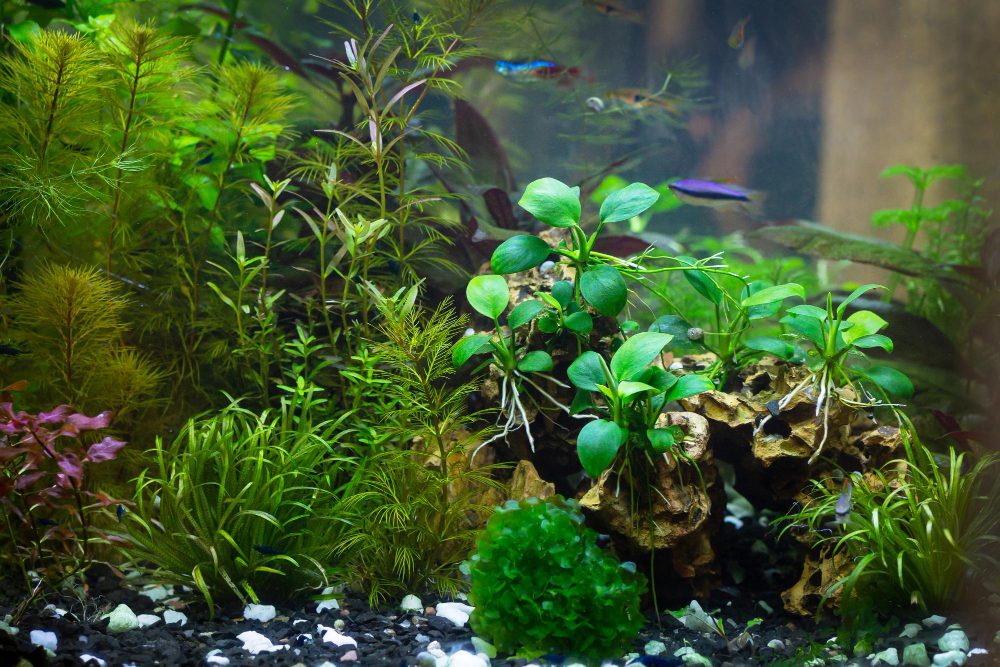
Choosing tissue culture aquarium plants is not only about picking the plants that look attractive. The right choice depends on your aquarium’s lighting, CO₂ setup, substrate, available space and the type of aquascape you want to create.
Tissue culture plants are available in many different forms, from compact foreground plants and carpeting varieties to colourful stem plants and larger midground options. Bunnycart’s tissue culture collection includes popular choices such as Monte Carlo, HC Cuba, Hairgrass, Staurogyne repens, Rotala, Ludwigia, Bacopa, Cryptocoryne and Alternanthera.
Understanding where and how you want the plants to grow can make it much easier to choose the right varieties for your aquarium.
What Should You Consider Before Buying Tissue Culture Plants?
Before selecting your plants, consider these factors:
- Aquarium size: Smaller tanks generally benefit from compact plants that do not quickly dominate the available space.
- Lighting: Plant growth and colour development can vary depending on the intensity and duration of lighting.
- CO₂: Some demanding carpeting and colourful plants can benefit significantly from supplemental CO₂.
- Substrate: Root-feeding plants may perform better when planted in a suitable nutrient-rich substrate.
- Aquascaping style: Your plant selection should match whether you want a carpet, natural green layout, colourful stem background or a structured hardscape.
- Maintenance: Choose plants according to how frequently you are comfortable trimming and replanting.
Choose Tissue Culture Plants Based on Where You Want Them to Grow
One of the easiest ways to select plants is to decide which part of the aquarium you want to fill.
Foreground and Carpet Plants
Foreground plants are used to create a low-growing appearance around rocks, wood and other hardscape elements.
Popular tissue culture options include:
- Monte Carlo
- HC Cuba
- Hairgrass
- Staurogyne repens
- Cryptocoryne parva
- Lilaeopsis brasiliensis
Monte Carlo can create a soft, spreading green carpet, while HC Cuba is suited to aquascapers looking for a finer and denser foreground appearance. Hairgrass provides a grass-like lawn effect, while Staurogyne repens creates a compact, bushier foreground.
Midground Plants
Midground plants help connect the foreground with taller plants in the background.
Good options can include:
- Cryptocoryne wendtii
- Cryptocoryne walkeri
- Cryptocoryne x willisii
- Staurogyne repens
- Lobelia cardinalis
- Hydrocotyle tripartita
These plants can be useful around rocks, driftwood and other hardscape features where you want more visual depth without completely covering the background.
Background and Colourful Stem Plants
If you want height or stronger colour contrast, consider stem plants such as:
- Rotala Hi Red
- Rotala Rotundifolia Pink
- Rotala Blood Red SG
- Rotala Orange
- Rotala Wallichii Red
- Ludwigia palustris
- Ludwigia Arcuata Dark Red
- Ludwigia Dark Orange
- Bacopa varieties
- Alternanthera varieties
Stem plants can help create vertical layers and add colour behind green foreground and midground plants.
Choosing Plants for a Low-Tech Aquarium
If your aquarium does not use supplemental CO₂, focus on plants that are generally more adaptable rather than choosing a plant solely because it looks attractive in photographs.
Options such as Cryptocoryne, Bacopa and some Staurogyne varieties can be considered depending on the aquarium’s overall conditions.
However, “low-tech” does not mean that every plant will perform equally well without CO₂. Lighting, nutrients, water parameters and maintenance still affect plant growth.
Choose plants according to the conditions you can consistently maintain rather than trying to create a high-demand aquascape without the necessary equipment.
Choosing Plants for a CO₂-Injected Aquarium
A CO₂-injected aquarium gives you more flexibility when selecting demanding carpeting and colourful plants.
If you want a dense carpet, varieties such as:
- Monte Carlo
- HC Cuba
- Hairgrass
can be considered.
For colour and vertical growth, you can explore Rotala, Ludwigia and Alternanthera varieties.
CO₂ is not a guarantee of successful growth, but when combined with suitable lighting, nutrients and stable aquarium conditions, it can support faster and more vigorous plant development.
Want a Green Aquarium or More Colour?
Your preferred colour scheme can also guide your plant selection.
For a Mostly Green Aquascape
Consider plants such as:
- Monte Carlo
- Staurogyne repens
- Hairgrass
- Cryptocoryne
- Bacopa
- Lobelia cardinalis
These can help create a natural green appearance with different leaf shapes and growth patterns.
For a Colourful Aquascape
Consider varieties from Rotala, Ludwigia, Bacopa and Alternanthera.
Red, orange and pink shades can be used strategically rather than throughout the entire aquarium. Placing colourful plants among green varieties can create contrast and help draw attention to specific areas of the aquascape.
How Many Tissue Culture Plants Should You Buy?
There is no single number that works for every aquarium.
The amount you need depends on:
- Aquarium dimensions
- Plant species
- Planting area
- Desired planting density
- How quickly you want the aquascape to fill in
- How much of the tissue culture portion you divide before planting
A single tissue culture cup can generally be divided into multiple smaller portions before planting. For carpeting plants, spreading smaller portions across the planting area can help distribute the plants rather than placing the entire cup in one location.
For larger aquascapes, you may need multiple cups of the same variety to achieve more consistent coverage.
Can You Mix Different Tissue Culture Plants?
Yes. Mixing different varieties can help create layers, contrast and a more natural-looking aquascape.
For example, you could combine:
Foreground: Monte Carlo or Hairgrass
Midground: Staurogyne repens or Cryptocoryne
Background: Rotala or Ludwigia
This approach allows you to create differences in height, leaf shape and colour while keeping each plant in an appropriate position.
When combining plants, consider their expected growth pattern so that faster-growing varieties do not quickly overshadow slower-growing plants.
Why Choose Tissue Culture Aquarium Plants?
Tissue culture plants are grown under controlled laboratory conditions and are supplied in a compact form. They are popular among aquarists who want to reduce the likelihood of introducing unwanted algae, snails and other hitchhikers associated with some conventional plant sources.
Before planting, the tissue culture material should be removed from the container and the growing medium should be washed away. The plant can then be separated into smaller portions and planted throughout the aquarium.
This makes tissue culture a convenient option for aquarists who want to start a clean planted aquarium.
How to Select the Right Tissue Culture Plant
A simple way to narrow down your choices is to start with your aquarium conditions rather than the plant name.
If you want a carpet:
Look at Monte Carlo, HC Cuba, Hairgrass or other compact foreground varieties.
If you want compact midground growth:
Consider Staurogyne repens and suitable Cryptocoryne varieties.
If you want height:
Look at Rotala, Ludwigia and Bacopa varieties.
If you want red or orange colour:
Explore suitable Rotala, Ludwigia and Alternanthera varieties.
If you want a natural green layout:
Combine different green foreground, midground and background plants to create layers.
If you are keeping a low-tech aquarium:
Prioritise plants that are appropriate for your available lighting, nutrients and maintenance routine rather than choosing only by appearance.
Final Thoughts
The best tissue culture aquarium plant is not necessarily the most popular variety. It is the plant that matches your aquarium conditions and the aquascape you want to create.
Start by deciding whether you need foreground, midground or background plants. Then consider your lighting, CO₂ availability, substrate, maintenance routine and preferred colour scheme.
From compact carpeting plants such as Monte Carlo and HC Cuba to colourful Rotala, Ludwigia and Alternanthera varieties, there are many options to build a planted aquarium around your own setup.
Find the Right Tissue Culture Plants for Your Aquarium
Ready to choose your plants?
Explore Bunnycart’s tissue culture aquatic plant collection to compare different foreground, midground, carpeting and colourful varieties available for planted aquariums in India.
Choose the plants that match your aquarium setup, create the layout you have in mind, and start building your planted aquarium with healthy tissue culture plants.
Please fill in the form get updates on new articles.
